Blog
Plain-English explainers on reading supplement labels, backed by the numbers from every US label in the NIH DSLD.
Every number is computed from the label data and linked to its source. Subscribe with the RSS feed.
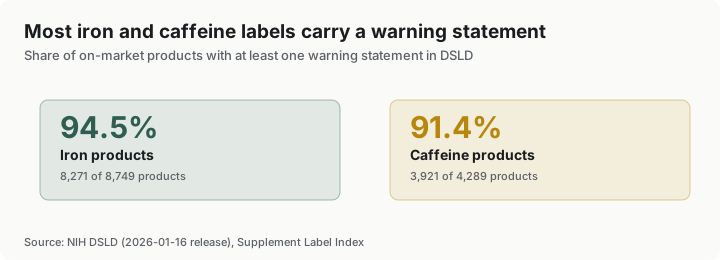
The Claims Census: what US supplement labels actually say
251,337 label statements analyzed. Most common phrases, where risk-reduction wording comes from, and why 94.5% of iron and 91.4% of caffeine products carry a warning statement.
By Alykhan Virani · October 2, 2026 · 6 min read
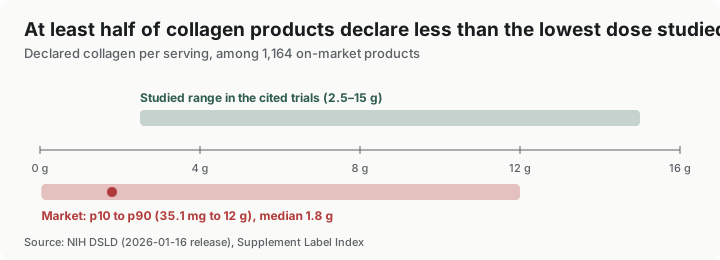
Collagen supplements: what labels declare vs. the doses that were studied
The median collagen product declares 1.8 g per serving; the cited trials used 2.5 to 15 g. Gummies run far lower. How hydrolyzed peptides, gelatin and UC-II differ, and what labels leave unsaid.
By Alykhan Virani · October 2, 2026 · 6 min read
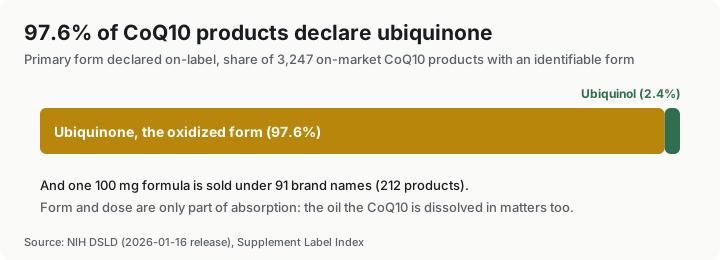
CoQ10 labels: ubiquinone vs. ubiquinol, and why the softgel matters too
97.6% of CoQ10 labels declare ubiquinone, 2.4% ubiquinol. The median is 60 mg, one 100 mg formula is sold by 91 brands, and absorption depends on the oil the CoQ10 sits in.
By Alykhan Virani · October 2, 2026 · 5 min read
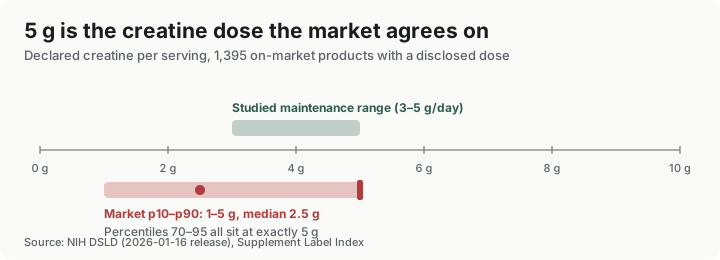
Creatine: one form, one dose, and a market that mostly agrees
77% of creatine labels declare monohydrate and the most common dose is 5 g, the top of the studied maintenance range. 126 products from 82 brands share one formula. What labels and trials say.
By Alykhan Virani · October 2, 2026 · 7 min read
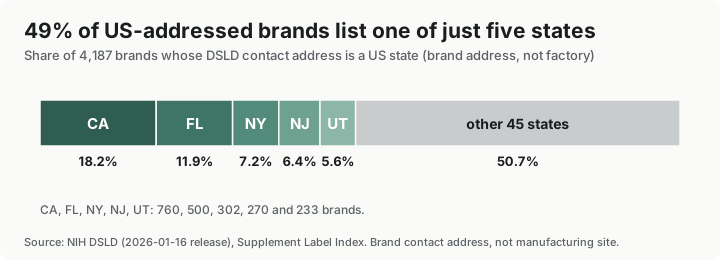
Half of US supplement brands list one of five states
California, Florida, New York, New Jersey and Utah hold 49% of US-addressed brands in DSLD. Utah has about 1% of US residents but 5.6% of brands. These are brand addresses, not factory locations.
By Alykhan Virani · October 2, 2026 · 6 min read
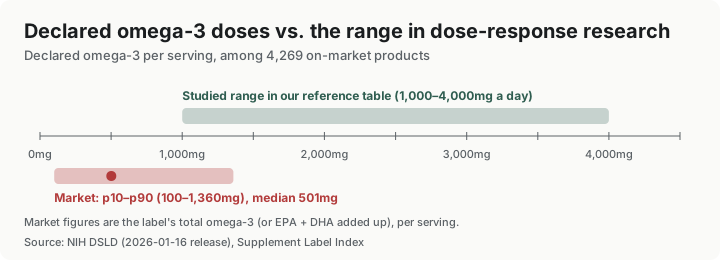
Fish oil labels: "total omega-3" is not the same as EPA plus DHA
More than half of omega-3 labels lead with a total line, and the median declares 501 mg per serving. What labels say, what trials tested, and why EPA plus DHA is the number to find.
By Alykhan Virani · October 2, 2026 · 6 min read
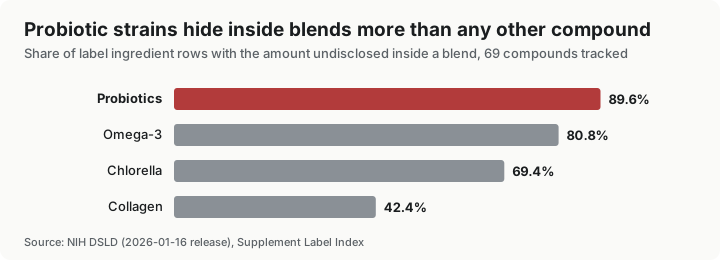
Probiotic labels: CFU, strain names, and the blends that hide both
89.6% of probiotic ingredient rows sit inside a proprietary blend, the most of any compound we track. What CFU, strain names and 'through expiration' mean, and where the evidence is strain-specific.
By Alykhan Virani · October 2, 2026 · 7 min read
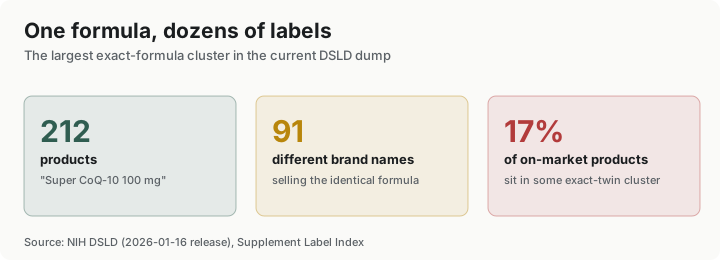
Formula Twins: the same supplement, sold under 91 different names
212 products sold under 91 brand names share one identical formula — one of 4,192 such clusters, covering 17.0% of on-market supplements. How private-label manufacturing works.
By Alykhan Virani · September 27, 2026 · 6 min read
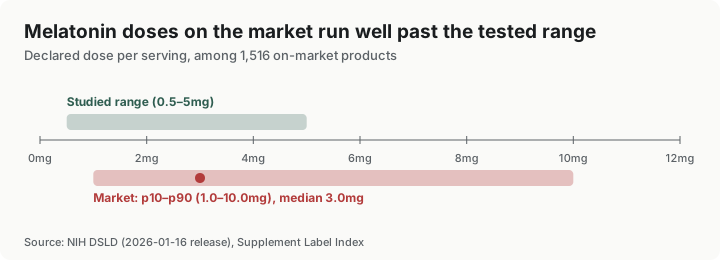
Melatonin isn't a vitamin, and the market treats its dose that way
Melatonin has no RDA, no established UL, and no regulatory dose ceiling. On-market doses run 1–10mg; the research behind its sleep-onset effect mostly used 0.5–5mg.
By Alykhan Virani · September 27, 2026 · 4 min read
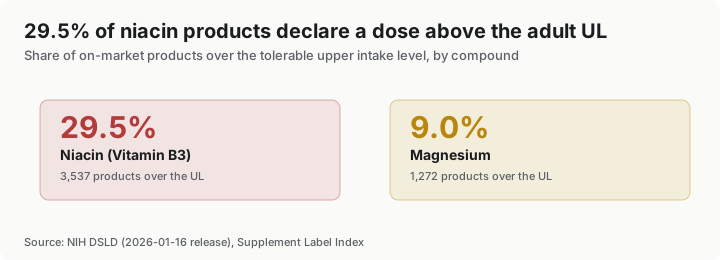
Nearly 1 in 3 niacin products cross the adult upper limit — and the UL doesn't distinguish why
29.5% of on-market niacin products declare a dose above the adult tolerable upper intake level, by far the highest share of any compound we track this way. The UL covers two very different forms.
By Alykhan Virani · September 27, 2026 · 5 min read
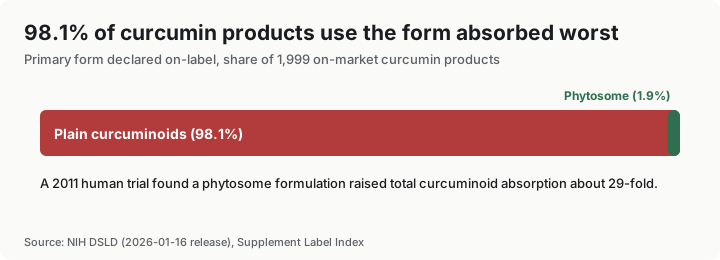
The Cheap Form Index: why curcumin and ashwagandha labels rarely match the research
98.1% of curcumin products use the form absorbed worst, and only 3.2% of ashwagandha products use the extract studied in clinical trials. Here is why the form matters as much as the ingredient.
By Alykhan Virani · September 22, 2026 · 5 min read
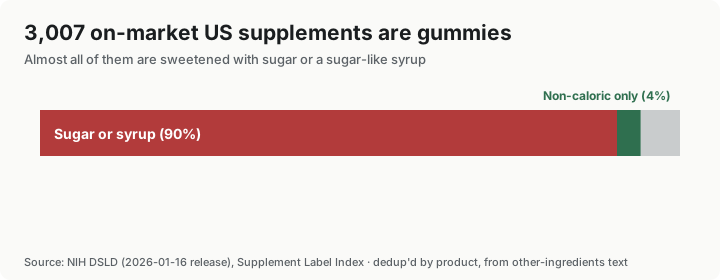
The gummy tax: what you give up when a vitamin comes as candy
3,007 on-market US supplements are gummies, 90% sweetened with sugar or syrup, and many deliver a fraction of the active ingredient in a capsule. Here's what the trade-off actually looks like.
By Alykhan Virani · September 22, 2026 · 6 min read
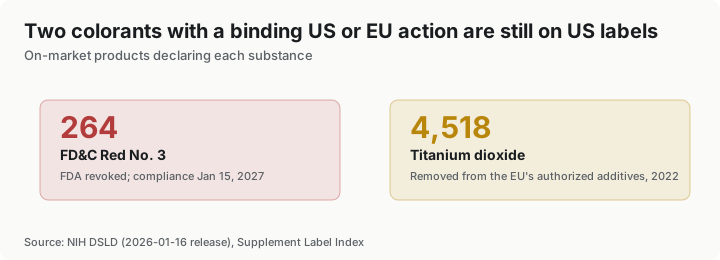
Restricted elsewhere, still on US supplement labels: titanium dioxide and the synthetic dyes
4,518 US supplements list titanium dioxide, removed from EU food additives in 2022; 264 still list FD&C Red No. 3, revoked by FDA itself. What's actually binding, and what isn't.
By Alykhan Virani · September 22, 2026 · 6 min read
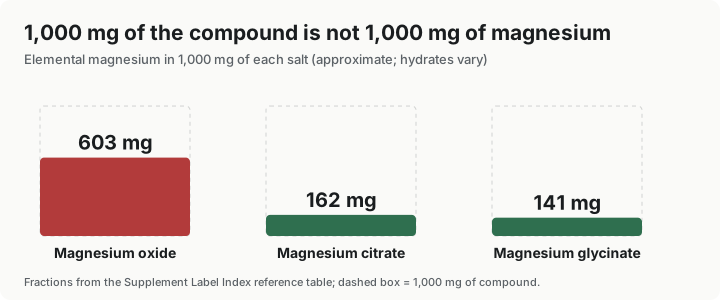
Magnesium oxide, citrate or glycinate? What the form on your label tells you
Nearly half of magnesium supplements never name their form, and 1,000 mg of the compound is not 1,000 mg of magnesium. Here is how to read the label.
By Alykhan Virani · September 20, 2026 · 6 min read
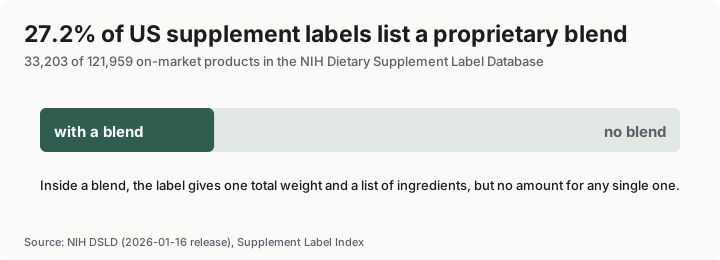
Proprietary blends: the supplement label line that hides the dose
More than one in four US supplement labels lists a proprietary blend. Here is what the rules require, what they let brands keep secret, and how to read one.
By Alykhan Virani · September 20, 2026 · 6 min read
Follow new findings with the Insights RSS feed — it updates each time the label data refreshes.